Settle in, folks. This one’s a bit of a doozy, but I promise it’s worth your time.
I’ve been a full-time freelance illustrator, surface designer, and art educator since 2019, and it’s been amazing! But I’m still looking to grow my business.
One of the ways I want to do that is by developing and launching my own products with my art on them. Having products with my artwork on them is why I’m a licensed surface designer!
But y’all?
I WANT FULL CREATIVE CONTROL OVER MY PRODUCTS AND THE ART I MAKE FOR THEM…
…and freelancing and licensing just do not allow for that fully.
It’s wonderful, don’t get me wrong!
When it comes to licensing, I have only ever worked with really kind people who’ve given me reasonable, helpful feedback on my work. But they’re still running a company with their own audience and knowledge of what sells best to said audience. So naturally, that influences the kind of artwork they want from me.
(Don’t even get me started on how frustrating some freelance clients can be. 😮💨)
And look. Sometimes I really want to make surface design artwork that isn’t just florals, wholesome nature, and holidays. I want to make more witchy stuff! More weird niche interest stuff! And a lot of the time, companies who license artwork are not selling to the marketplaces that cater to weird, niche interests. Whereas places like Etsy and Spoonflower? And random unique brand websites? That’s where buyers go to find quirky, niche interest artwork!
So you see, I want to be my own art director with the final say over at least one aspect of the art side of my business. And I haven’t really had that so far…
…At least not in any way that was particularly successful. 😅
There are many things I did wrong—spreading myself too thin, not knowing how to market my work effectively, not giving any single platform enough of my focus, etc. etc.—but I think the #1 reason I failed so hard at this is that I did not make art with the end product or buyer in mind.
All of my work that has been successful was designed for a specific end product in mind. Namely, bolt quilting fabric.
I designed to it so hard, it’s kind of the only thing a lot of my patterns work on.¯\_(ツ)_/¯
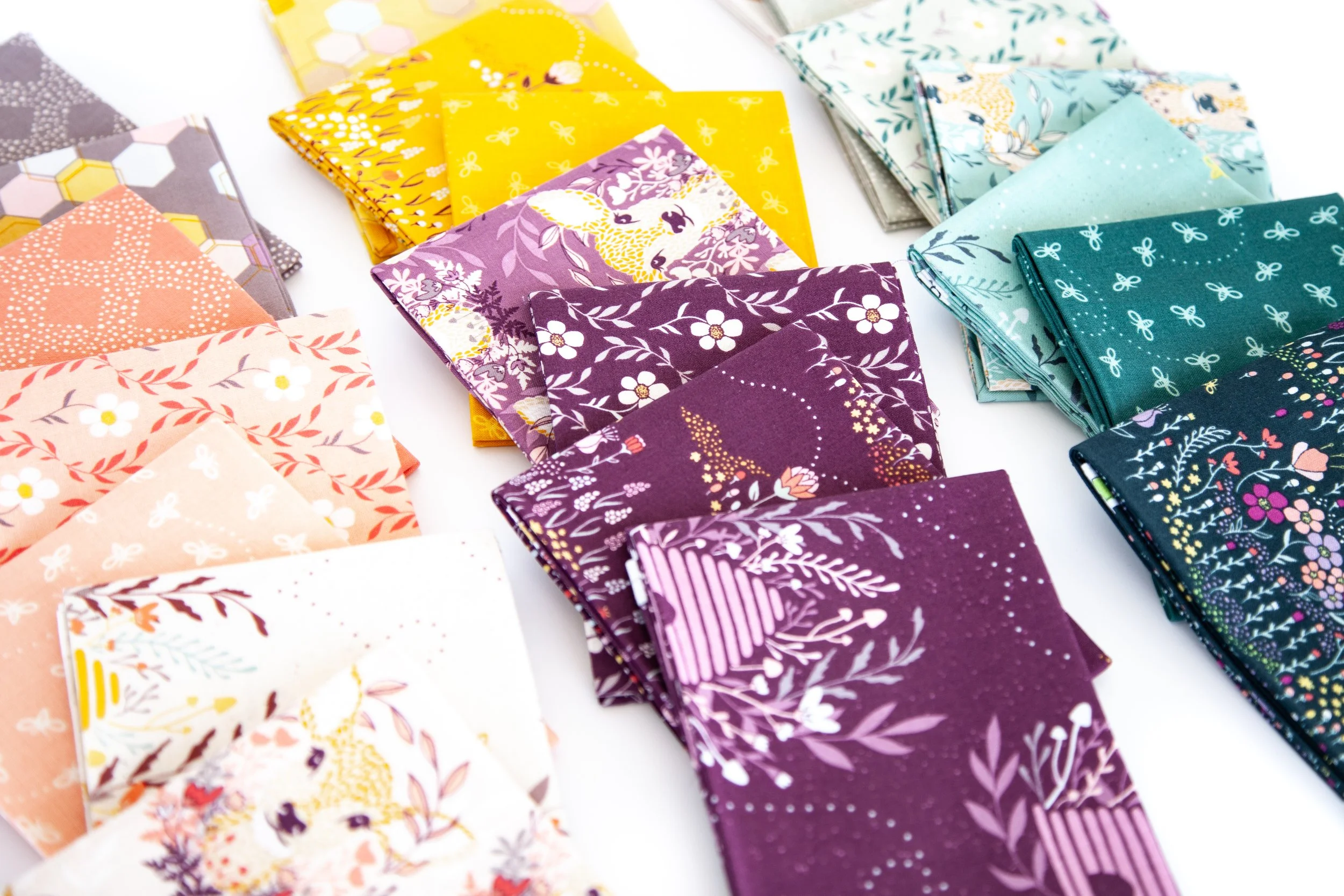
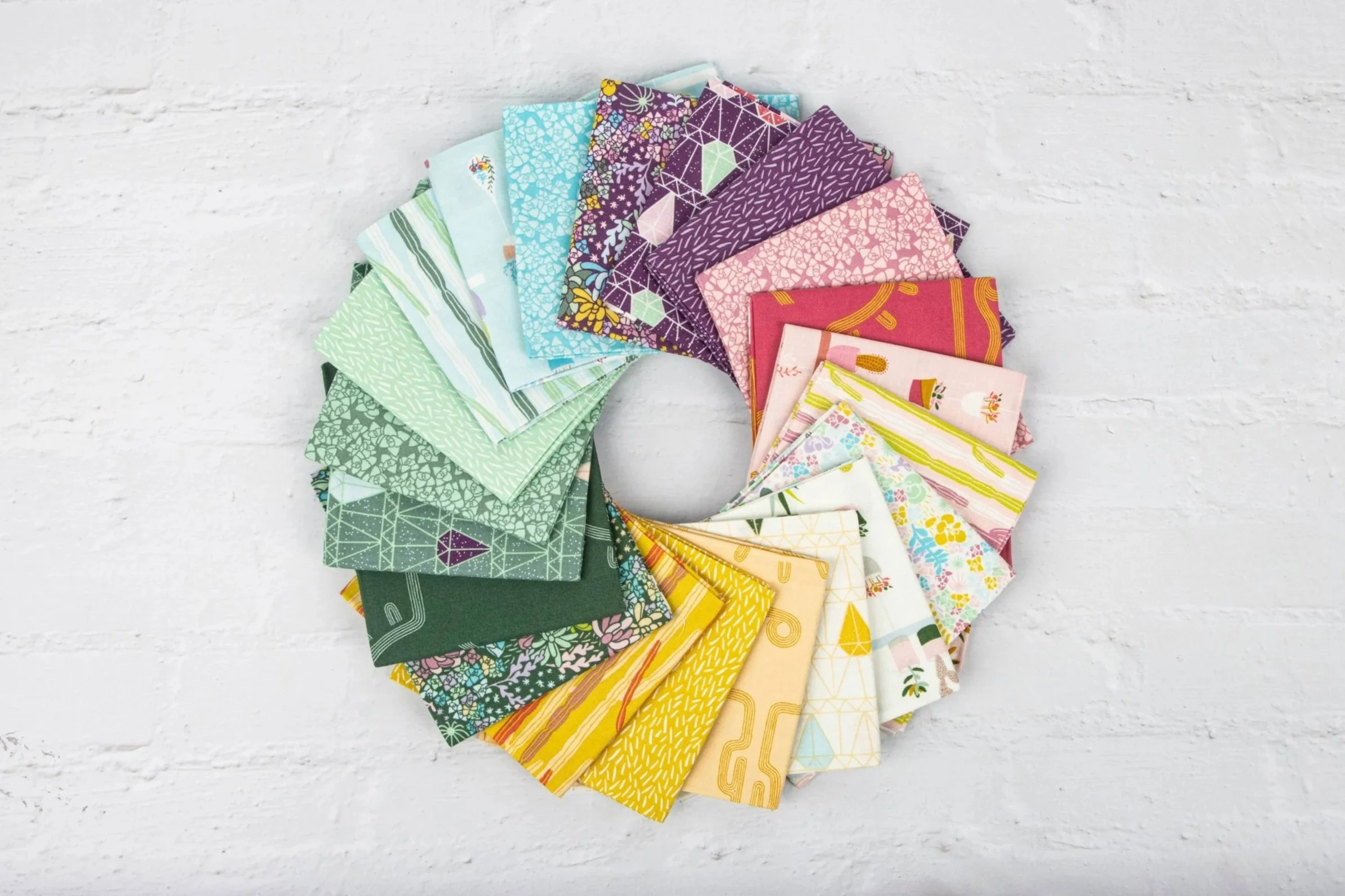
Like these pattern collections specifically designed for bolt fabric for quilting! - Licensed with Riley Blake Designs
This is not necessarily a bad thing! I love being a fabric designer! But I understand now why my patterns weren’t selling on other products, and why I had such a hard time getting other industries to license my work.
Side note: if you subscribe to my newsletter, you may have already read the next section of this post, in which case, feel free to…
Outside of my licensing work and character illustration, I spent years just slapping my art on products and hoping people would buy them.
And as you now know, they didn't. 😆
But hey! Now, at least, I understand why…
So I’ve been thinking about why people buy things. Why I personally buy things with art on them.
Namely, when am I more likely to make a purchase, and why?
And I noticed two big themes:
Functionality: The product serves a function beyond just decoration (not that there’s anything at all wrong with decoration for the sake of decoration, but I tend to be more willing to spend money on something that is multipurpose and/or practical). A calendar isn't just decoration; it helps me plan my year.
Personal Connection: I buy things that speak to me, whether that's through the artwork itself (hello, queer pride pins!) and/or the functionality of the product feels personal (example: journals, planners, and calendars hold and document memories).
Often, the products that succeed aren't just beautiful. They're useful to the people buying them.
SO THAT'S NICE, MELISSA, BUT HOW EXACTLY DO YOU DESIGN ARTWORK WITH THE BUYER IN MIND?
Especially as a beginner without sales data or a clear ICA (ideal customer avatar) yet?
Two magical words: research and trends.
If you’re groaning right now, please just bear with me. For years, I took a pretty relaxed approach to trends, myself. Constantly chasing them felt exhausting and stressful, and frankly, not sustainable for the speed at which I create art (i.e. very slowly 🫠 🐢).
But I've evolved on this.
While I still don't think we should blindly chase every trend, I do think trends can give us useful clues about what people are drawn to, what colors are showing up in retail, and what themes are gaining momentum.
And if the word 'trends' makes you feel stubbornly rebellious like a teenager who doesn’t want to be told what to do, I hear you! Because same. I want to be punk rock! I don’t want to do whatever everyone else is doing! 😂
But something being popular doesn’t automatically make it less valuable.
We all love popular stuff. (For example, I love pop music and pumpkin spice lattes. 👈👈😎☕️)
And if you think you don’t, I’m sorry, but you are lying to yourself. 😂
There's a balance to be found, folks. And as I mentioned before, there is absolutely an audience for niche subject matter; you just have to know how to find it (*). But before I get to that, I want to quickly speak on…
BALANCING PERSONAL TASTE WITH COMMERCIAL VIABILITY
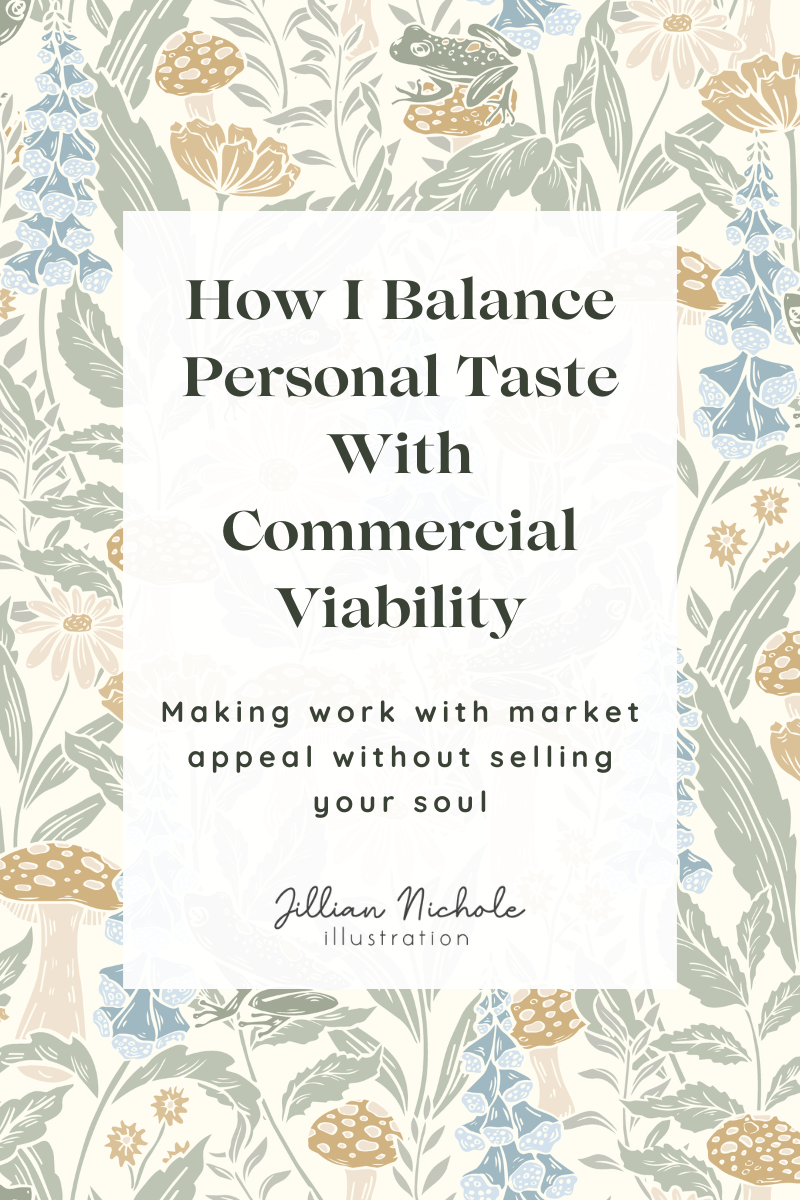
If you want to dive deeper into this, my dear friend Jillian Nicole wrote an excellent post on how she balances personal taste with commercial viability that speaks to this perfectly. She talks about finding the trends that overlap with what you personally love, and her process for deciding what to design. She uses a decision tree of four questions:
Do I want to draw this?
If not, could I make it more ME?
If yes, do I WANT to make it more ME?
If yes at any point —> DO IT! If no to any of these or the trend feels “off” —> PASS.
OKAY, SO HOW DO YOU DESIGN ARTWORK FOR A SPECIFIC END PRODUCT?
Well, unfortunately, the answer to that question depends on the product, and this post is already too long as it is. But I also think that, honestly, the answer is a little more straightforward than figuring out your ICA, and just being aware of the fact that not every pattern or placement print (i.e. non-repeating illustration) is going to work on every product (or surface, heh) is half the battle.
FINDING YOUR NICHE: HOW TO DISCOVER UNDERSERVED MARKETS
When I sent out a poll to my newsletter subscribers asking them what they wanted to learn from me next, how to discover underserved markets was a clear winner. So let's talk about that.
Underserved niches are gaps where specific audiences are searching for art that doesn't exist yet. Is POD saturated? Yeah, a lot of it is. But when you design to a niche or product type (for example, hand-drawn calendars) that isn’t widely represented, you’re competing with your niche, not everyone on the platform.
Here's my process that I learned from the wonderful Liz Kohler Brown:
I’m an affiliate of The Studio by Liz Kohler Brown, which means I may earn a commission (at no extra cost to you) if you join through my link.
Step 1: Before even looking at the drawing board, go on Etsy, Spoonflower, or whatever platform you're interested in selling on, and do your research. You need to figure out two things: Who are you making the art for, and how are they going to find it?
It can be hard to put yourself in the headspace of someone else, so to start, think about things you're interested in drawing, and start by searching how you would search for products in that theme if you were the buyer. What terms would you use?
What actual words will people type based on the things they like and desire?
Focus on the words that people use to find designs and products and make art to those words.
(Side note: I don't love encouraging AI use for much, but it can be genuinely helpful for expanding search terms and SEO keywords. Ask it for good search terms related to your theme. It can be a great jumping-off point if you feel stuck on your initial ideas.)
Step 2: From there, search those terms, and take note of what subjects are represented in the product artwork that is already being sold on any given platform. For example, if you search “funky animal print” and there are tons of pages of unusually colored animal prints, that’s not an underserved market. At least not on that platform.
Another thing to consider…
How many pages of designs is the average customer willing to look through? How many would you look through?
Personally, I would be happy if my products showed up on page three of a search on a platform like Etsy.
THAT STILL SOUNDS COMPLICATED, MELISSA
I hear you. Liz recently posted a bonus lesson in her creative membership, The Studio, on keyword mining strategies. In her words:
Learn practical keyword-mining strategies to uncover less-competitive ideas for patterns, products, and illustrated artwork. Liz demonstrates how to research buyer language on Etsy, Spoonflower, and Google, evaluate genuine competition, and organize promising niches in a reusable keyword spreadsheet. You’ll also discover how personal interests, occupations, hobbies, customer complaints, and existing shop data can reveal valuable SEO opportunities that generic keyword tools often miss. Use this process to create more targeted surface pattern designs, improve product visibility, and build a more sustainable print-on-demand income stream.
It’s so incredibly helpful, y’all. Liz is so generous with her knowledge and expertise! Here’s a blog post with more on why I love The Studio membership so much.
BUT WHAT IF THERE’S A SUPER POPULAR TREND THAT REALLY SPEAKS TO YOU?
Great! Design to it! There are ways to make your work stand out even in an oversaturated market. For example, if you’re designing a calendar, look at what’s already being sold and look for ways your cover art can stand out. E.g. see lots of desaturated colors? Make something brighter!
Also pay attention to what styles are present in the subjects you’re searching. Could your style bring something different and unique to the table? Maybe that’s still worth designing to. Especially if it brings you joy!
Think of trends and research as your starting point. Take what feels aligned with your style. Leave what doesn't. Most importantly, use these clues to create collections that still feel like you.
FINALLY, LET’S TALK ABOUT SEO.
I know, three letters that make many artists (especially beginners) shudder. I was one of those beginners! But the fact of the matter is that SEO (Search Engine Optimization) is extremely important.
When you optimize your titles, tags, and descriptions with the search terms people are actually using, you're making it easier for your ideal buyer to find your work.
(Side note: There's also this newer thing called GEO (Generative Engine Optimization), but that's a whole other blog post. 🫠)
AT THE END OF THE DAY:
When you design with the buyer in mind—when you understand what they're searching for, what they need, and what they're willing to pay for—I‘d bet that things will change for the better. You go from hoping people find your art to making it possible for them to find it.
That's what designing with intention looks like. And that's what led me to create the Enchanted Forest calendar—a product designed for people who love beautiful, functional art on their walls, in a theme that is trending big time right now.
So go forth, my padawans! Do your research. Find your niches and/or trends that spark joy (or as Jillian says, Find Your Frogs 🐸). Optimize your listings with those search terms. And create something you're genuinely proud of.
Your ideal buyer is out there searching. Let's make sure they can find you.💖
Love,